An agentic software factory turns requirements into verifiable work through teams of agents and people. Its scope includes applications, integrations, process automation, and infrastructure. To produce useful results, it needs a methodology that joins design, implementation, review, and operations.
A plan agents can execute
We start from the business problem and the existing environment. We define users, data, the main workflow, exceptions, and acceptance criteria. In a project with a database, an API, and an interface, we break the work down by dependencies so that each phase delivers a contract the next one can use.
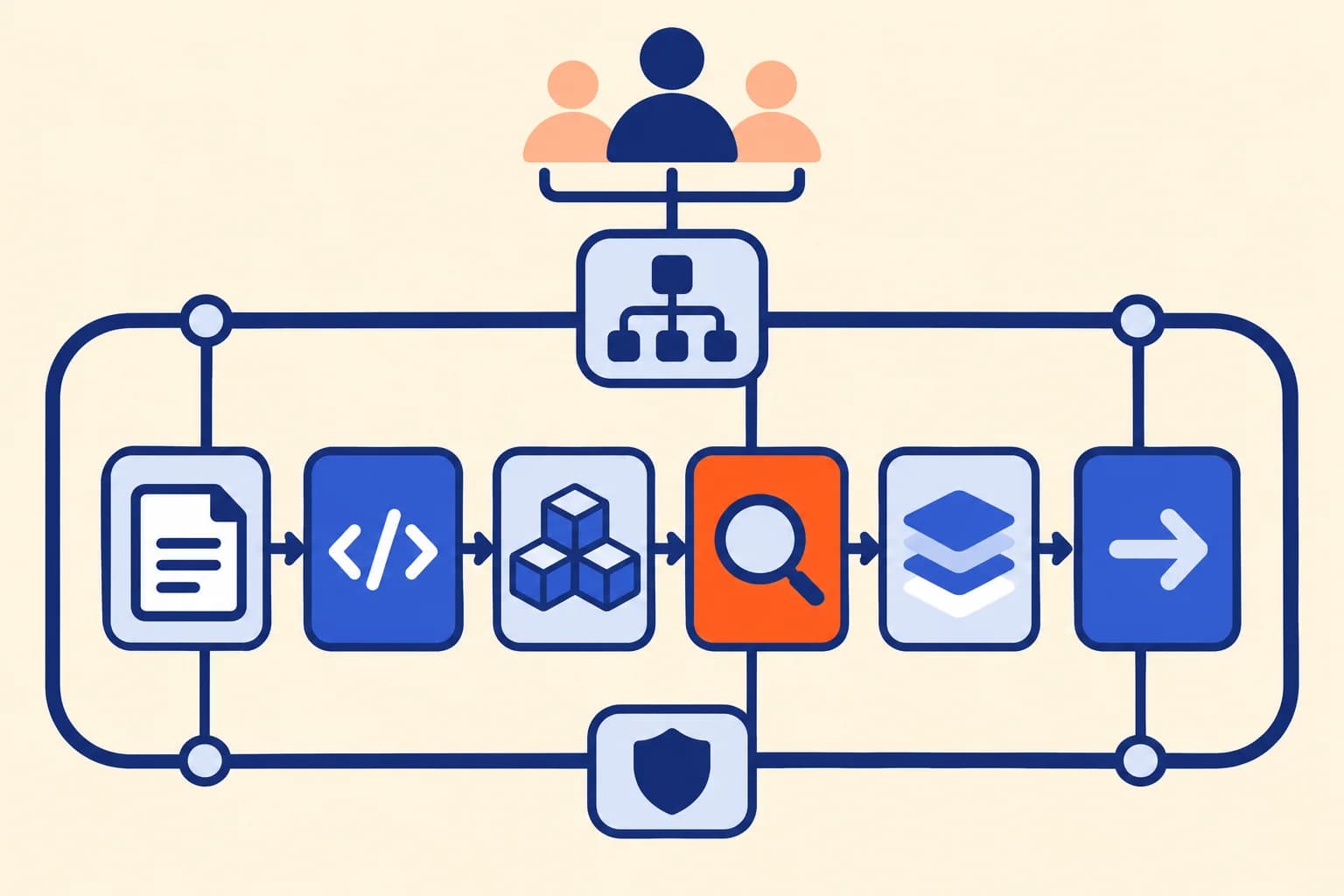
The plan sets which files or systems each agent may touch and what evidence it must return. A small task can be solved by one agent; several specialties or dependent phases require explicit coordination. We choose the working mode according to the structure of the problem.
Specialization and independent review
Planning, backend, user experience, integrations, and documentation have different responsibilities. Agents can collaborate across those domains with a coordinator who keeps the objective and the decisions.
Implementation goes through an independent review and is corrected again when a defect is found. Cycles have limits and exit criteria. Automated review is accompanied by tests and by a person responsible for accepting the result; an approval message without sufficient evidence does not complete the delivery.
Test a real workflow
We choose the checks according to risk: logic, API contracts, data, permissions, integration, interface, and end-to-end workflows. For a website we add browser, mobile, accessibility, and visual checks. For an ingestion we review duplicate documents, missing fields, and recovery after a failure.
Evidence identifies the validated version and the environment. Changes go through branches, review, and promotion before reaching production. Migration and rollback are prepared alongside the deployment, so that each release has a known recovery path.
Infrastructure as part of the solution
We configure APIs, databases, queues, scheduled tasks, and execution services. We can integrate AWS environments and Cloudflare services when the project requires it, in addition to private or dedicated infrastructure. The choice depends on data, load, latency, operations, and cost.
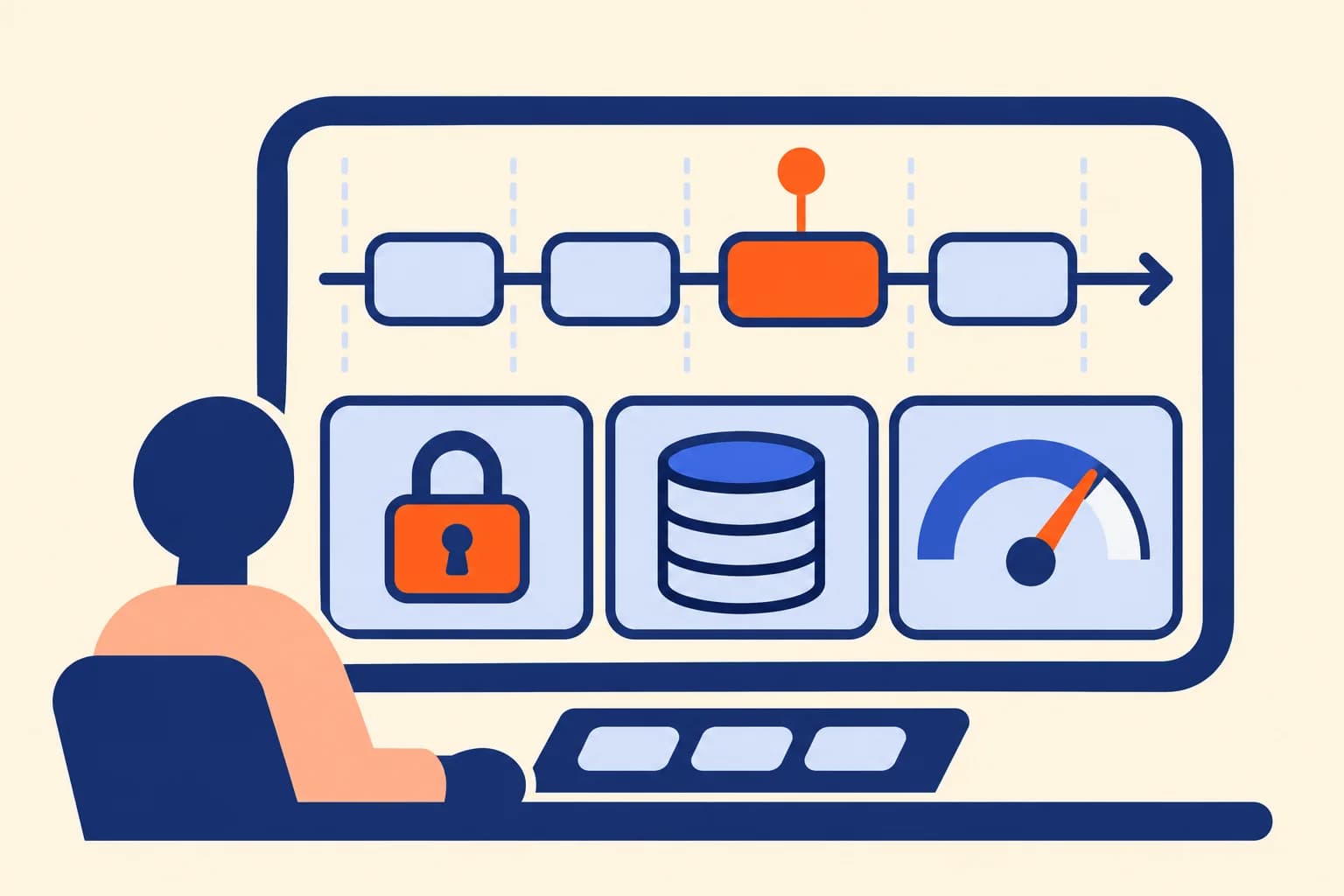
Operations agents can watch health, prepare reports, and propose actions. Writes that affect production are limited to the approved scope. Access to an infrastructure tool does not grant general permission to change all of its resources.
Governance and security by design
We assign capabilities per agent, credentials per environment, and cost and duration limits where they are implemented. External actions need a clear approval policy. The documents, emails, and pages an agent reads are treated as input data, and we verify that their instructions do not alter the system's permissions.
Memory needs provenance, access, and retention. Logs and deliverables must exclude secrets. We review isolation, dependencies, errors, retries, and auditing as part of the project, with specific tests for the agreed controls.
Working 24/7 with accountable owners
Continuity combines scheduled tasks, observability, alerts, and recovery procedures. The ability to run agents at any hour comes with change windows, support, and supervision. We deliver software and a maintainable working system: specifications, evidence, procedures, and decisions the client can review. The operations service defines coverage and response responsibilities.