Newstools for publishers
Editorial inventory, analytics, and intelligence
Editorial decisions backed by inventory, signals, and human review.
Let's talk about your project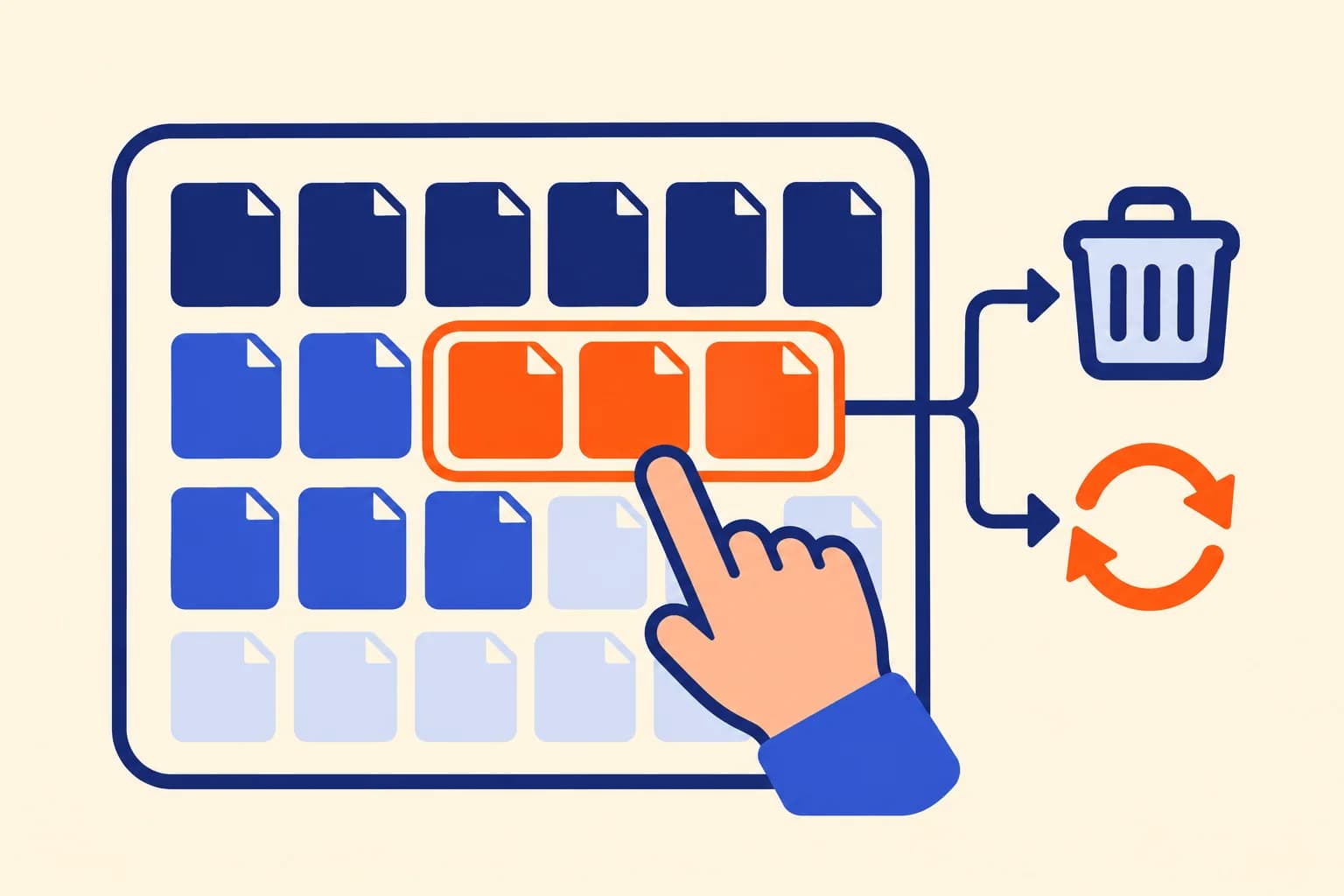
Cross-referenced inventory
CMS, crawl, Search Console, and analytics joined at the URL level and segmented by brand, section, and template.
Patterns, not lists
We group findings by sets of pages so that every action is reviewable.
Human review
Redirects and removals go through a person and are documented with evidence.
From inventory to decision
A person decides at this step
- Access and definitionsWe agree with your team on what counts as a brand, a section, a template, and which date is the reference.
- Source ingestionWe load CMS, crawl, Search Console, and analytics data, when available, and join them by URL.
- Normalization and segmentsWe clean the data and segment by brand, section, template, and date.
- Patterns and anomaliesWe detect duplicates, outdated pieces, and real changes against the noise.
- Editorial decisionYour team decides which sets of pages get updated, merged, redirected, or removed.
- Follow-upWe apply what was decided, record it with its evidence, and measure the effect on the agreed dates.
Every action on the archive stays tied to its evidence.
What it solves
A publishing group accumulates large volumes of URLs spread across brands, sections, and templates, and nobody has the full picture. The CMS knows what was published, the crawl knows what is served, Search Console knows what is searched, and analytics knows what is read. Each team works with one piece, and decisions about what to update, merge, redirect, or remove are made without crossing the four.
This service joins those sources into a single inventory and turns it into indicators, hypotheses, and priorities your team can check. We detect duplicates, outdated pieces, and improvement opportunities, and we group them by sets of pages so that actions are reviewable instead of a list of thousands of issues.
How we work
We start from shared access and definitions: what counts as a brand, a section, a template, and which date is the reference for your group. Without that, two dashboards give two different answers to the same question.
Then we normalize CMS, crawl, Search Console, and analytics data when available, and join them at the URL level. We segment by brand, section, template, and date, and we detect anomalies and real changes against the usual noise in search data.
With the cross-referenced inventory we group patterns and propose actions for each set of pages. Sensitive actions, such as redirects or content removal, always go through human review and documented evidence: nobody removes a piece because a dashboard says so.
What we deliver
- A unified inventory of URLs and content, segmented by brand, section, and template.
- Agreed indicators and monitoring dashboards that connect URLs, templates, sources, quality, and visibility.
- Testable hypotheses, priorities, and a dated follow-up plan.
- A record of the decisions made and the evidence behind them.
We do not promise traffic growth that cannot be verified: we deliver data your team can check and decisions it can defend.
Who it is for
Publishing groups with several brands, languages, or templates that need a shared view of their archive before a migration, a section reorganization, or a content refresh plan. Also newsrooms that want to know which part of their archive still brings readers and which part only consumes crawl budget.